佐賀県有田町にある井上萬二窯。
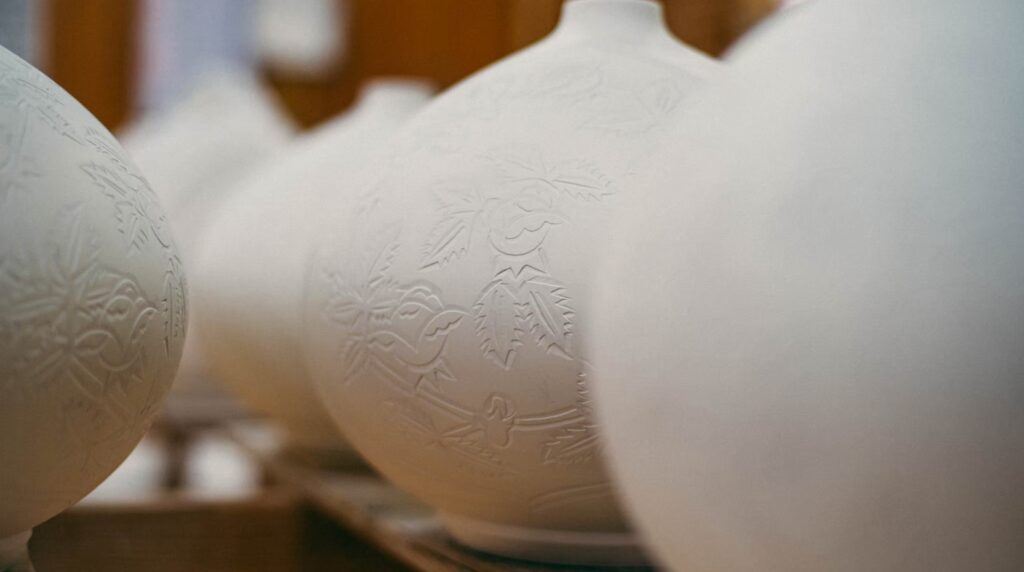
白磁を中心とした作品を手がける有田焼の窯元です。
初代当主の井上萬二は、ここ有田に生まれ、戦争の時代を生き、やがて陶芸の道へ進みました。
恩師との出会いを通して技術を磨き、焼き物への理解を深めながら、自らの表現を追い求めていきます。
井上萬二の人生の歩みとともに、開窯に至るまでをたどり、井上萬二窯の原点に触れます。
焼き物の家に生まれ、予科練へ
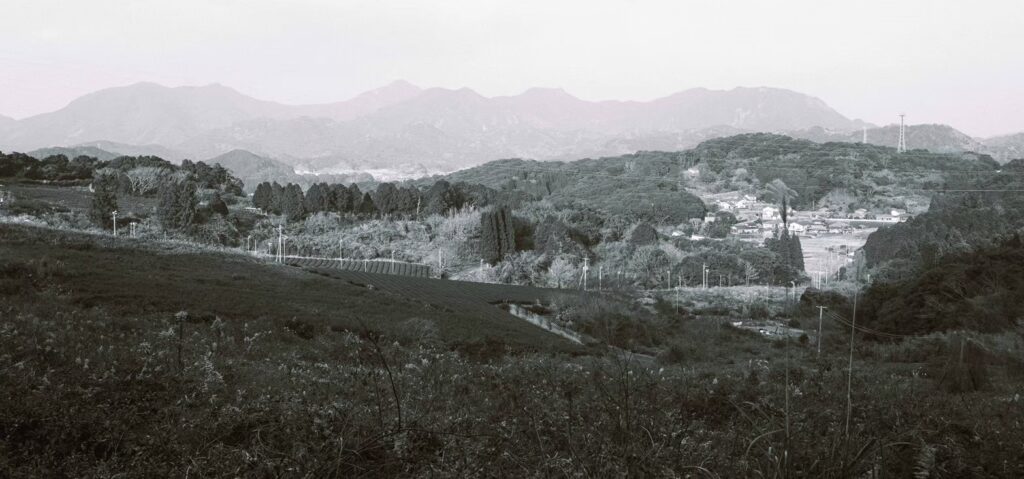
1929年(昭和4年)、井上萬二は佐賀県有田町に生を受けました。
生家は、祖父・惣吉が営んでいた「井上製陶所」。幼い頃から焼き物が身近にある環境で、萬二は育ちました。
しかし、少年時代の萬二が目指したのは、陶芸の道ではありませんでした。
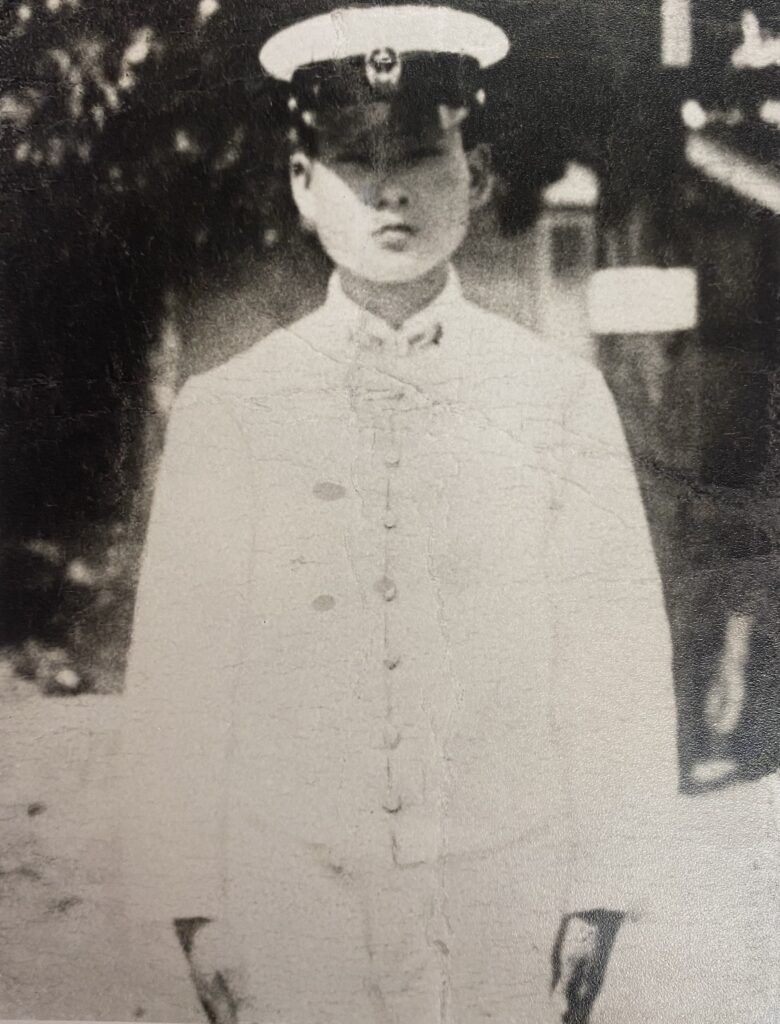
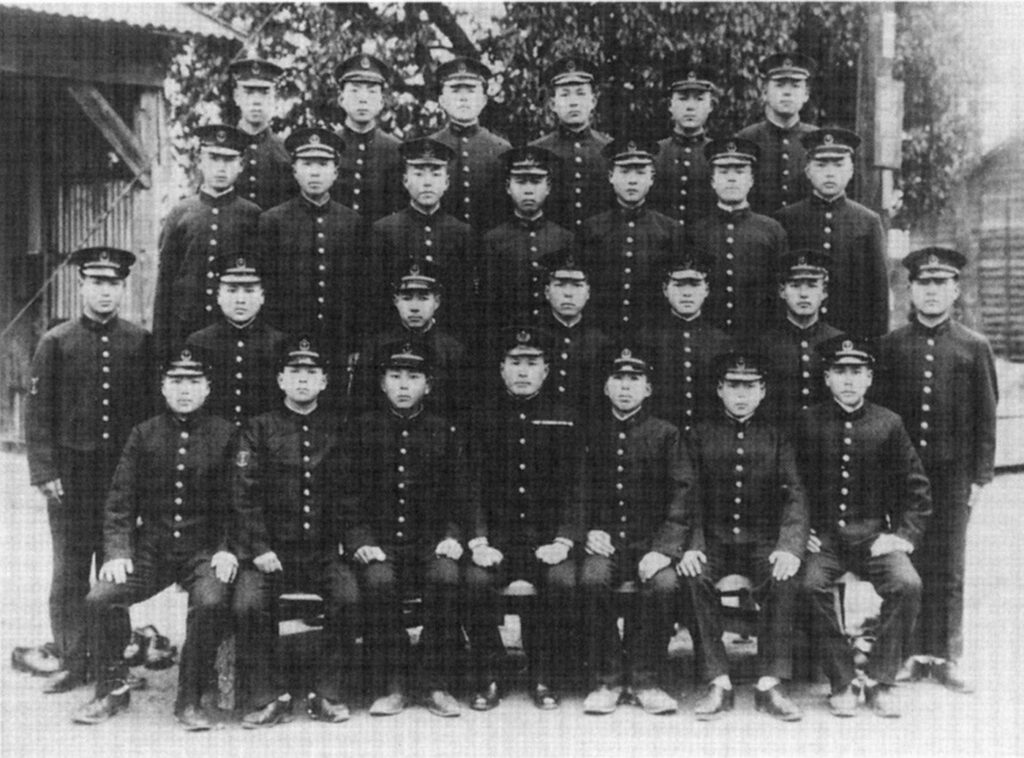
国のために尽くす軍人になることを志し、15歳で海軍飛行予科練習生として入隊します。鹿屋航空隊に配属され、現代では考えも及ばないほどの過酷な訓練に励んだといいます。仲間たちが次々と飛び立っていくのを見送りながら「次は自分だ」とその時を待つも、出撃することなく串良特攻基地で終戦を迎えました。
のちに萬二は、「戦争は絶対にあってはならないこと」と語りつつ、予科練で過ごした日々について、厳しい規律の中で極限まで集中することを求められた経験や、どのような困難にも耐え抜こうとする軍人精神が、その後の自身の人間形成に大きく関わったと振り返っています。
陶芸の道
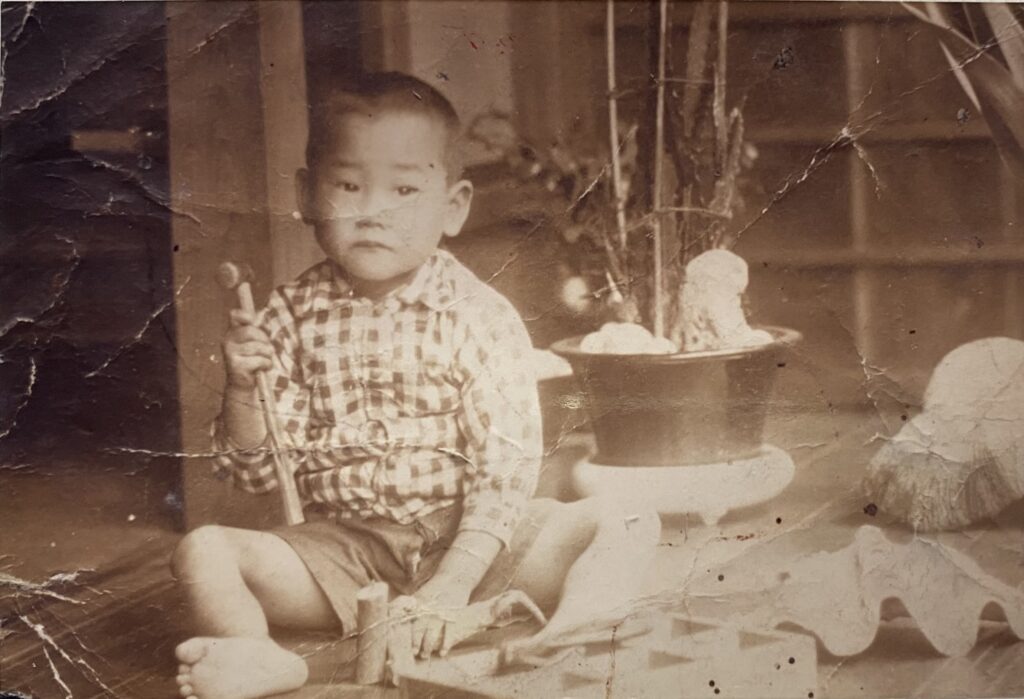
終戦後、16歳で有田へと復員した萬二は、戦時下の不況と荒波の中で事業が途絶えた井上製陶所について、父・輝二から「焼き物は平和産業にふさわしい。窯を復興させてほしい。」と告げられます。
国家への忠誠や親孝行が重んじられていた時代、父の思いを受け継ぎ、萬二は陶芸の道へ進むことになるのです。
恩師、奥川忠右衛門との出会い
こうして、父の勧めで十二代酒井田柿右衛門が当主を務めていた柿右衛門窯へ入り、修業が始まりました。
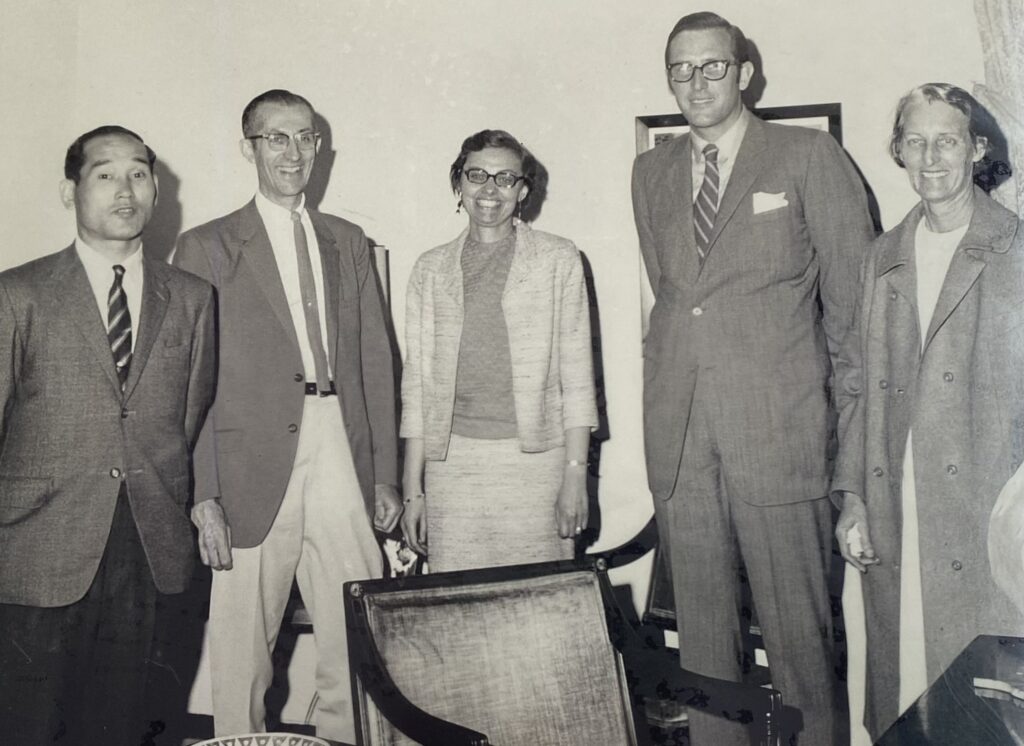
修業から5〜6年ほど経った頃、努力を重ねる一方で壁にぶつかり、暗中模索の日々を送っていた萬二に、運命を大きく変える出来事が訪れます。ろくろ師として名高い、初代奥川忠右衛門(のちの国の選択無形文化財保持者)との出会いです。
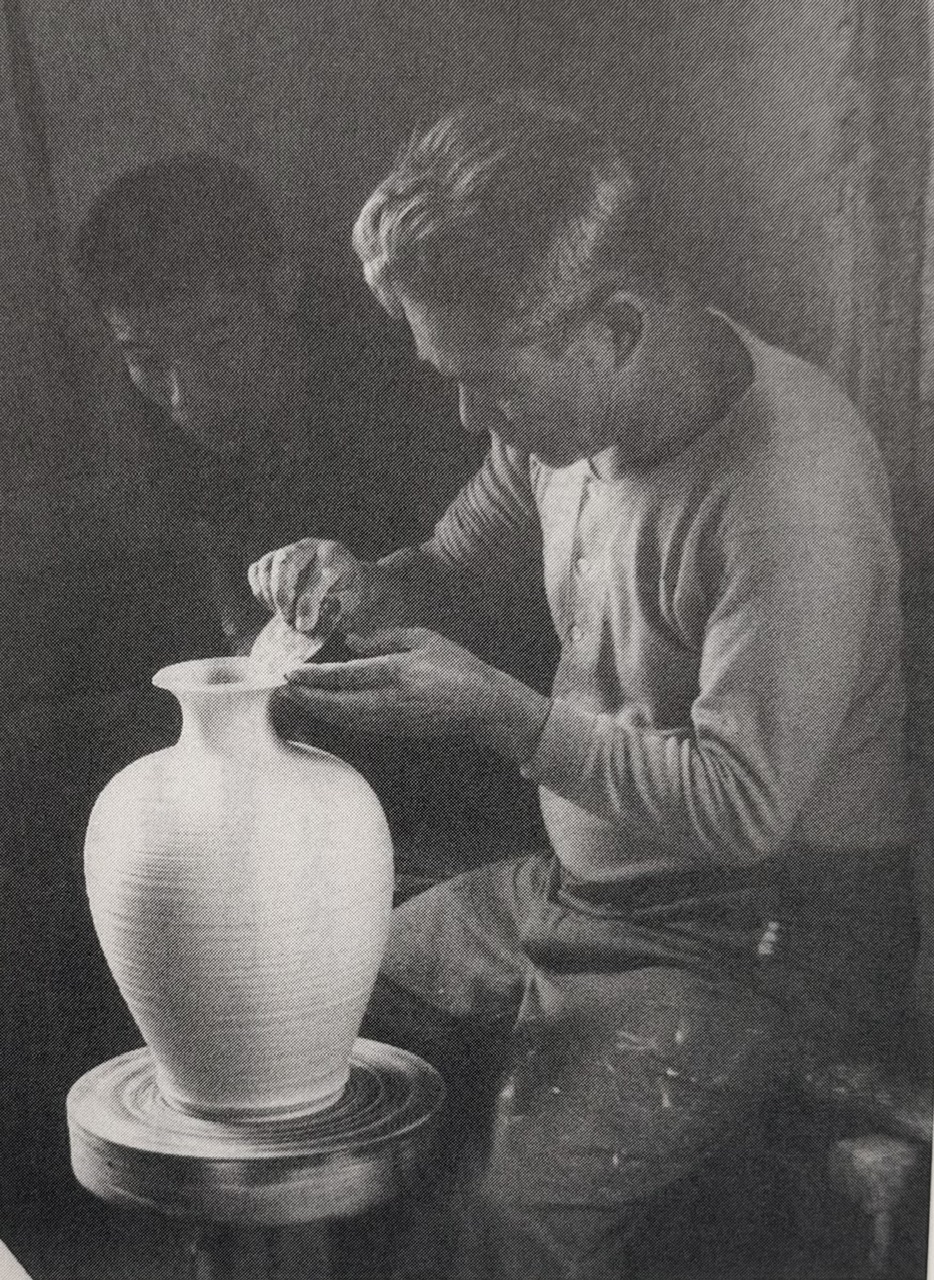
忠右衛門による、目の回るような速さで寸分の狂いもなく美しい大皿や壷を挽き上げる神業に、萬二は強い感銘を受けます。
萬二は忠右衛門の門下生となり、来る日もろくろと向き合い、師の教えを受けながら、技術を身体に刻み込んでいきました。忠右衛門の卓越した技術のみならず、豪快で人情深い人柄にも魅了された萬二は、生涯にわたり師と仰ぎ続けました。
忠右衛門から学んだろくろの技は、やがて萬二の制作の核となり、その後の表現を支える確かな礎となっていきました。
有田窯業試験場での研究、海外での指導
より幅広く焼き物について学びたいと考えた萬二は、13年間在籍した柿右衛門窯を退社し、1958年(昭和33年)、佐賀県立有田窯業試験場の技官へと転身します。
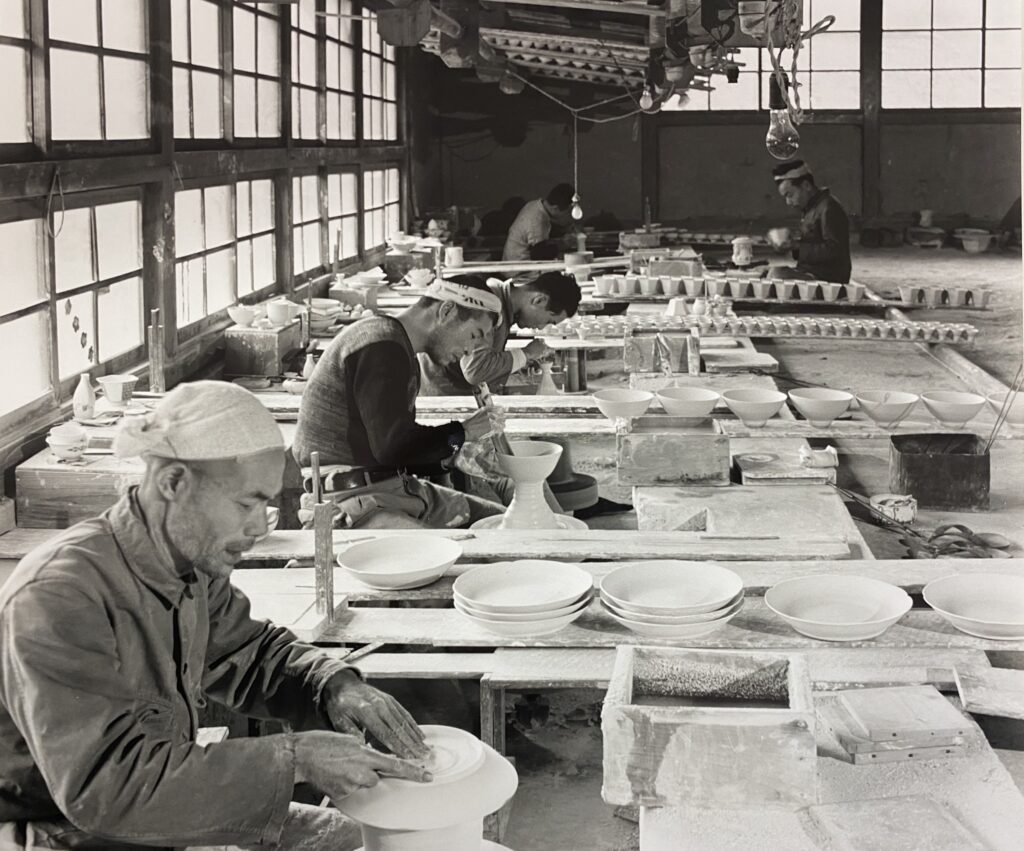
職人として培ってきた経験と感覚に加え、陶石の分析や釉薬の調合などのさまざまな研究や試験を通して焼き物を理論的に理解し、焼き物への知見をより多角的に深めていきました。
1969年(昭和44年)には、アメリカのペンシルベニア州立大学から招聘を受け、作陶指導のために単身渡米します。
その後も定期的に渡米し、ニューメキシコ州立大学では1999年(平成11年)頃まで指導にあたりました。
その教えを受けた生徒は、国内で500人を超え、アメリカでも150人以上に上るとされています。
技術習得に邁進する中で重ねた修練と、技術者・指導者としての経験、周囲からの助言により、萬二が心に抱いていた独立の意識は、より膨らんでいきました。
井上萬二窯の開窯
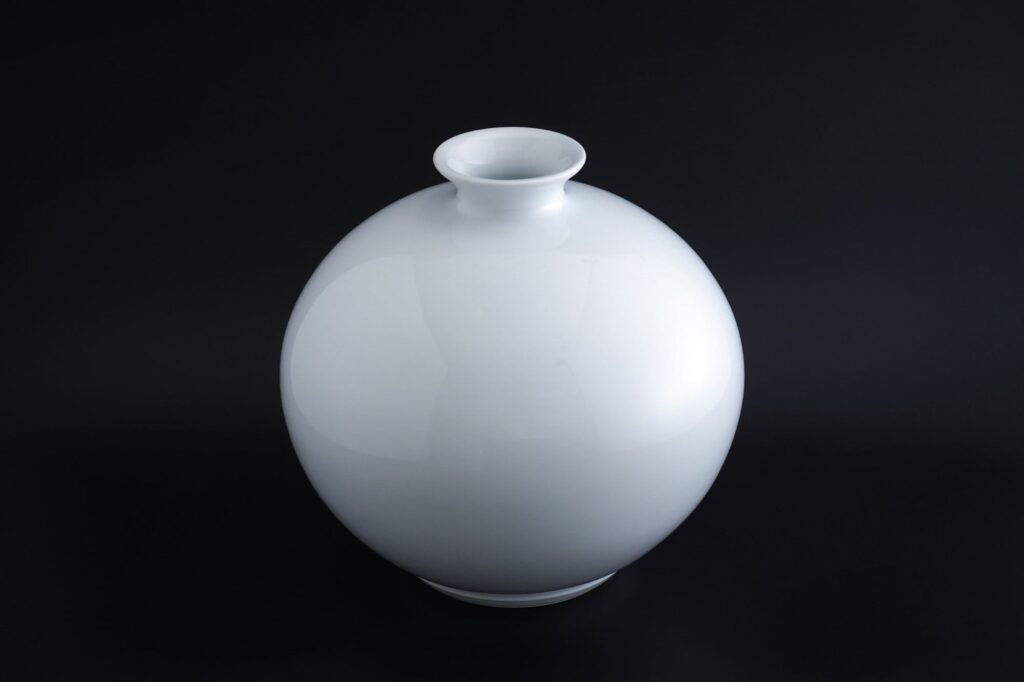
帰国後、1970年(昭和45年)、代表作品のひとつとなる『白磁丸形壷』が第5回西部工芸展で朝日金賞(最高賞)を受賞します。
窯業試験場を退職し、1971年(昭和46年)、42歳のとき、萬二は有田に「井上萬二窯」を開窯しました。
この頃から、加飾を施さない白磁は、造形美によってどこまで多様な作品を生み出せるのかを考え、追求するようになります。
こうして、井上萬二窯は、その歩みを始めるに至りました。
戦争を経験し、陶芸の道へ進み、師のもとでろくろを学び、研究と指導に打ち込んだ歳月。ひたむきな精進の先に、自らの窯を築く日が訪れたのです。
次回は、開窯後の井上萬二がさらなる高みを追い求め、1995年(平成7年)に重要無形文化財「白磁」保持者に認定されるまでをたどり、作陶と向き合う中で大切にしてきた座右の銘「名陶無雑」について綴ります。
In this vol.1, we trace the journey leading up to the establishment of the kiln alongside the course of Manji Inoue’s life, touching upon the origins of Inoue Manji Kiln.
It is located in Arita Town, Saga Prefecture and specializing in white porcelain, “Hakuji”.
The kiln’s founder, Inoue Manji, was born here in Arita in1929, lived through the war years, and eventually embarked on a career in ceramics.
Through his encounters with his mentor, he honed his skills and deepened his understanding of pottery while pursuing his own artistic expression.
From Clay to the Skies: A Ceramic Artist’s Origins
His family home was the ‘Inoue Pottery Workshop’, run by his grandfather, Sokichi. Manji grew up in an environment where pottery was a constant presence from an early age.
However, as a boy, his aspirations did not lie in the field of ceramics.
Aspiring to become a soldier who would serve his country, he enlisted as a Yokaren (Imperial Japanese Navy Aviator Preparatory Trainees) at the age of 15. Assigned to the Kanoya Air Group, he is said to have undergone training of a rigour that would be unimaginable today.
While watching his comrades take off one after another, he would wait for his turn, thinking, ‘Next it will be my turn,’ but he never saw combat, and the war ended while he was stationed at the Kushira Special Attack Base.
Later in life, Manji remarked that ‘war must never be allowed to happen’. Reflecting on his days in the cadet training programme, he noted that the experience of being required to concentrate to the absolute limit under strict discipline, and the military spirit of persevering through any hardship, played a significant role in shaping his character thereafter.
The Potter’s Journey: Born into Pottery, Called to the Skies
After the war, Manji, aged 16, returned to Arita as a demobilised soldier. His father, Teruji, told him about the Inoue Pottery Works—a business that had ceased trading amidst the wartime recession and turbulent times—saying, ‘Pottery is a fitting industry for peacetime. I want you to revive the kiln.’
In an era when loyalty to the state and filial piety were highly valued, Manji took up his father’s wishes and set out on the path of pottery.
Thus, on his father’s recommendation, he entered the Kakiemon Kiln—then headed by the twelfth-generation Sakaida Kakiemon—and began his apprenticeship.
Guided by a Master: His Encounter with Chuemon Okugawa
About five or six years into his apprenticeship, while Manji was striving diligently yet facing setbacks and trying to find his way, an event occurred that would drastically alter the course of his destiny: his encounter with the first Chuemon Okugawa (later designated a Preserver of Intangible Cultural Property=Living National Treasure), a master potter renowned for his work on the potter’s wheel.
Manji was deeply impressed by Chuemon’s masterful skill in throwing beautiful large plates and jars at a dizzying speed, without the slightest deviation.
Manji became a disciple of Chuemon and, day after day, faced the potter’s wheel, absorbing his master’s teachings and ingraining the techniques into his very being. Captivated not only by Chuemon’s exceptional skill but also by his bold and compassionate character, Manji continued to regard him as his master throughout his life.
The potter’s wheel techniques he learnt from Chuemon eventually became the core of Manji’s creative practice, forming a solid foundation that underpinned his subsequent artistic expression.
Research in Arita, Teaching the World
Wishing to broaden his knowledge of ceramics, Manji left the Kakiemon Kiln, where he had worked for 13 years, and in 1958, took up a post as a technical officer at the Saga Prefectural Arita Ceramic Research Institute.
Building on the experience and intuition he had cultivated as a craftsman, he gained a theoretical understanding of ceramics through various research projects and experiments, such as the analysis of ceramic clay and the formulation of glazes, thereby deepening his knowledge of the craft from a more multifaceted perspective.
In 1969, he accepted an invitation from Pennsylvania State University in the United States and travelled there alone to teach pottery.
He continued to visit the United States regularly thereafter, and taught at New Mexico State University until around 1999.
It is estimated that he taught over 500 students in Japan and more than 150 in the United States.
Through the rigorous training he undertook while striving to master his craft, combined with his experience as a craftsman and instructor, and the advice he received from those around him, Manji’s long-held aspiration for independence continued to grow.
The Birth of Inoue Manji Kiln
After returning to Japan, in 1970, his ‘Hakuji Round Jar’—which would become one of his signatures works—won the Asahi Gold Prize (the highest honour) at the 5th Western Crafts Exhibition.
Having resigned from the Ceramic Research Institute, he established the ‘Inoue Manji Kiln’ in Arita in 1971, at the age of 42.
From around this time, he began to contemplate and explore just how diverse a range of works could be created through the aesthetic beauty of form alone, using undecorated white porcelain.
Thus, the Inoue Manji Kiln began its journey.
Having lived through the war, embarked on the path of ceramics, learnt the potter’s wheel under his master, and devoted himself to research and teaching for many years, the day finally arrived when, through his single-minded dedication and diligence, he established his own kiln.
In Vol.2, we are going to trace his journey after the opening of Inoue Manji Kiln as he strove for ever greater heights, leading up to his designation in 1995 as a holder of the National Living Treasure- ‘Hakuji’-, and also, we will share about his motto, “Meito-Muzatsu” (Fine pottery is free from impurity), which he had held dear throughout his pottery-making career. We hope you enjoyed reading this vol.1 and look forward to our next post!
Thank you for reading. We appreciate your continued support and interest in our work.