白磁の美を追い求め、作陶の道を歩み続けた井上萬二。
たゆまぬ研鑽と尽きることのない探究心により白磁の可能性を広げ、やがて重要無形文化財(人間国宝)に認定されます。
開窯後の白磁をめぐる萬二の歩みと、生涯大切にした「名陶無雑」の精神、そして次代へ受け継がれるその心をたどります。
日本伝統工芸展での入選、そして開窯へ
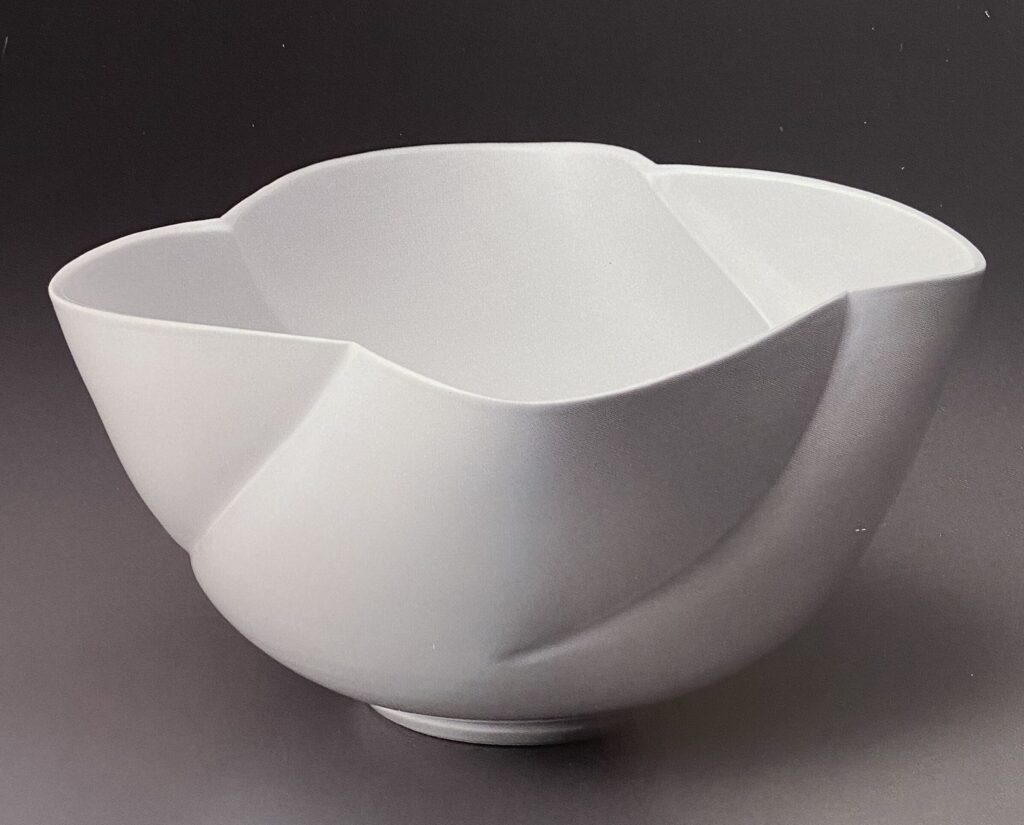
1968年(昭和43年)、39歳のとき、第15回日本伝統工芸展に初出品し、『白磁流雲練込花器』、『白磁花形花器』の2作品が入選します。
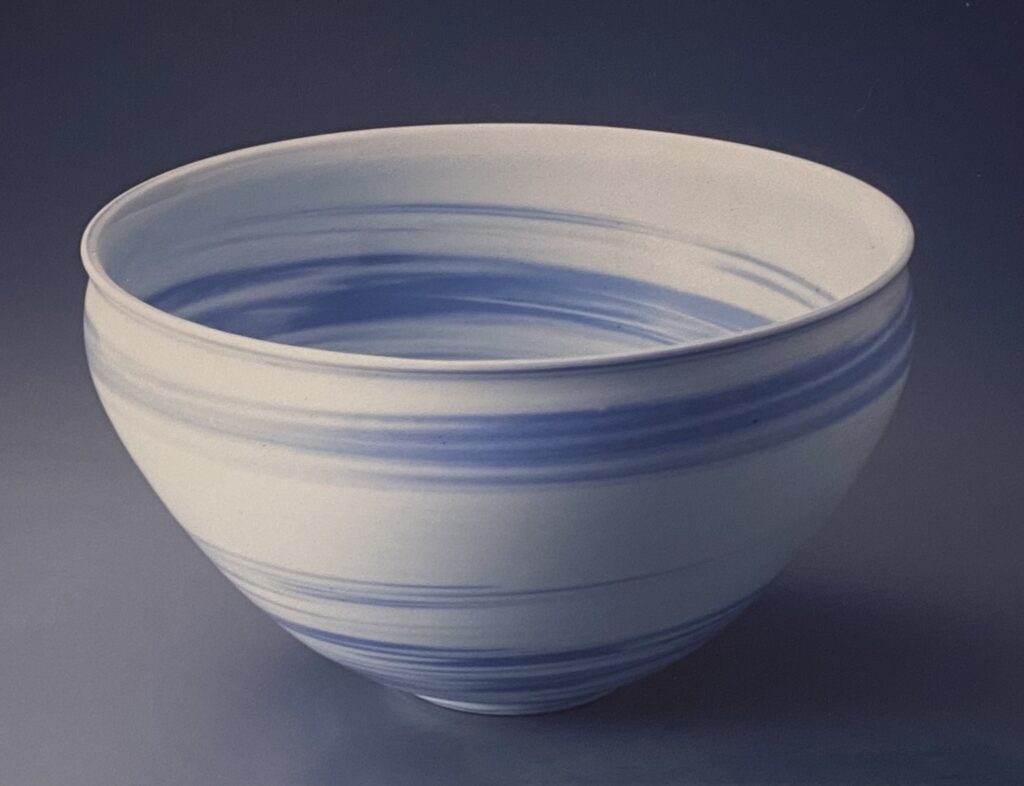
『白磁流雲練込花器』は、呉須を練り込んだ磁器土をろくろ技術で端正に成形した作品で、青い空に流れる雲を思わせるその表現には、海軍飛行予科練生時代に抱いた、大空を行くパイロットへの憧れが込められているといいます。
日本工芸展での2作品同時入選に手応えを得て、以後白磁の作品を積極的に出品するようになりました。
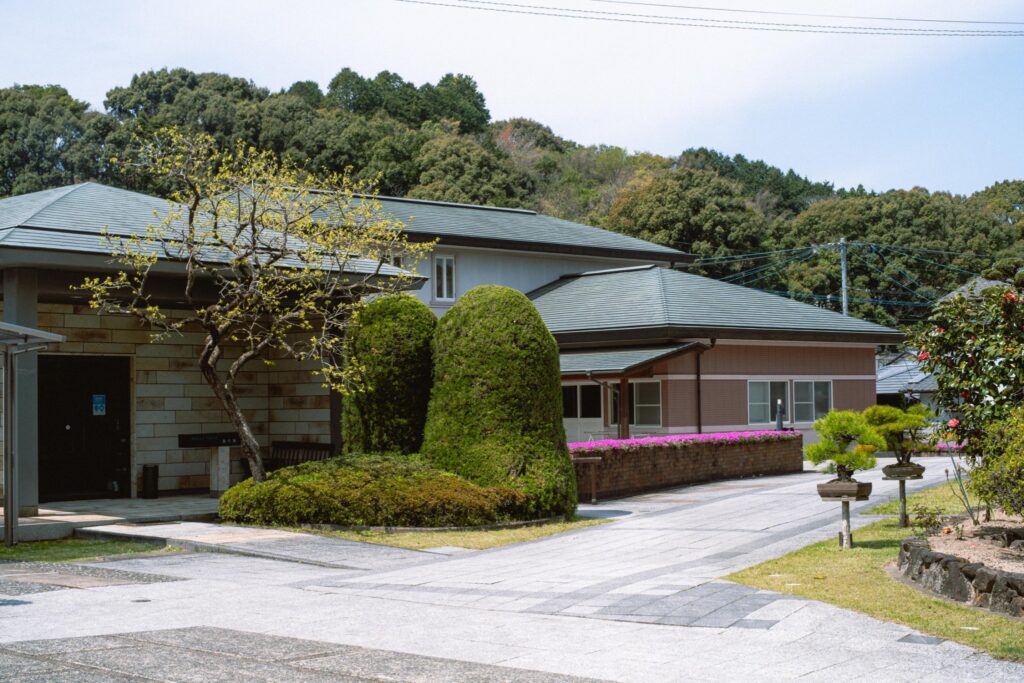
その3年後の1971年(昭和46年)、萬二は生家でありかつて途絶えた井上製陶所があった地に、自身の窯である「井上萬二窯」を築き、陶芸家として本格的な独立の道を踏み出しました。
終戦後、16歳で復員し家路についた萬二が、父・輝ニから託された再興の願い。それは、萬二が42歳のとき、井上萬二窯の開窯により新たな形となって受け継がれることとなったのです。
少年のこころ
1979年(昭和54年)、作陶における技能が認められ「現代の名工」として労働大臣の表彰を受けます。
加飾を施さない白磁は、造形美のみでどれほど多様な作品を生み出せるのか。どのような表現へと昇華できるのか。そうした探究を続ける萬二が同時に心掛けていたのは、豊かな心を持ち続けることでした。
陶芸家としての評価を高めていく中でも、溢れる好奇心と新たな発想、そして生涯にわたる作陶への意欲は止まることがありませんでした。萬二は自身のこうしたバイタリティの強さについて、「焼き物に心を惹かれている限りは、何歳になっても心は万年少年の気概」と、後年語っています。
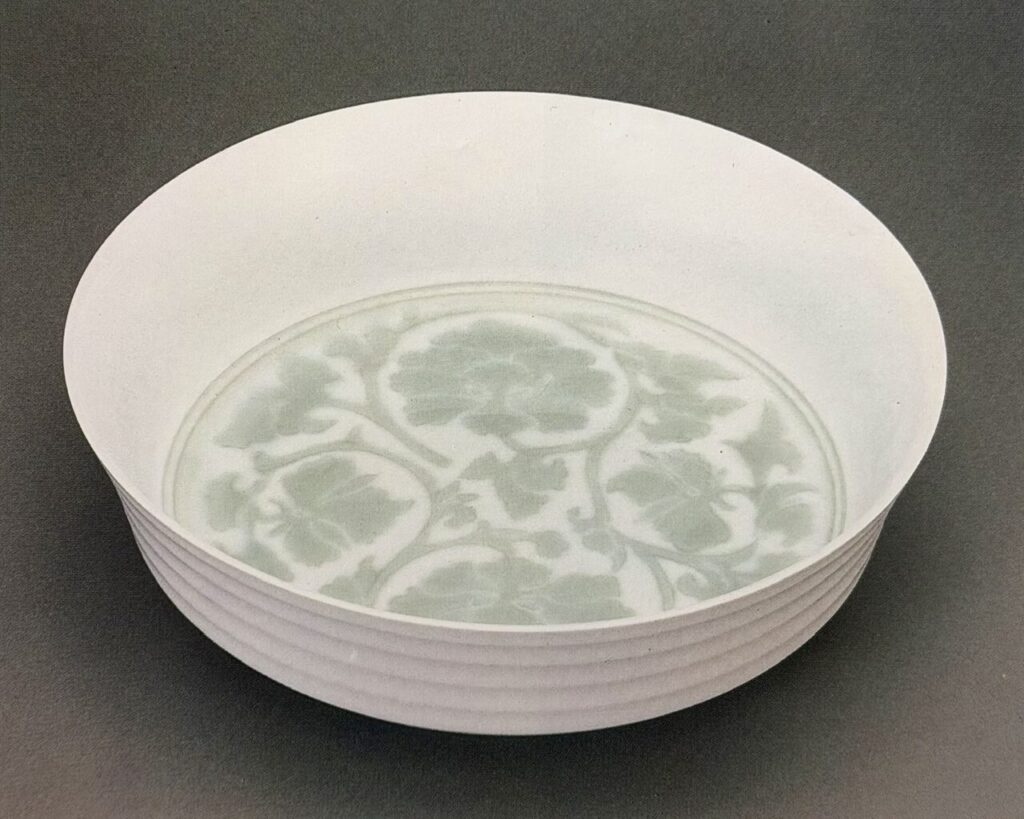
そして、中国・景徳鎮窯を視察した際に目に留まった古陶磁から着想を得て手がけた作品をもとに、改良を重ね「青白磁彫文鉢」が制作されました。
1987年(昭和62年)、第34回日本伝統工芸展で「青白磁彫文鉢」は文部大臣賞を受賞します。
この作品は白一色ではありませんが、白磁による白の美しさを主としながら釉薬の‘掛け分け‘を行い、白と緑釉の青緑との色彩のコントラストによって表現されています。萬二は、この技法を「私の作陶の第二の行き方」と語っています。その後、白一色の白磁とともに、掛け分けの技法による数多くの作品が生まれ、萬二の作陶における新たな一つの道が広がっていったのです。
重要無形文化財「白磁」保持者に認定
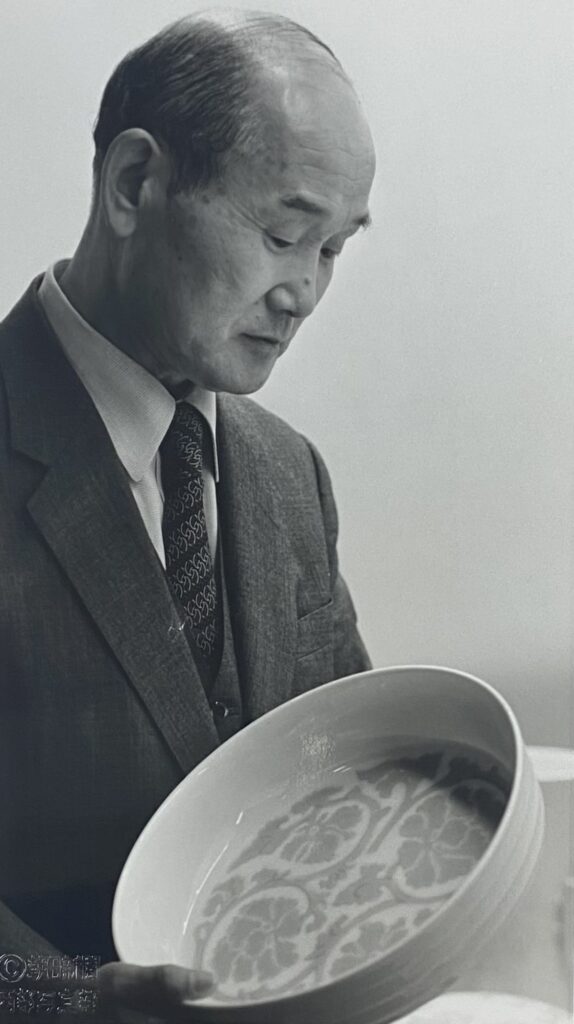
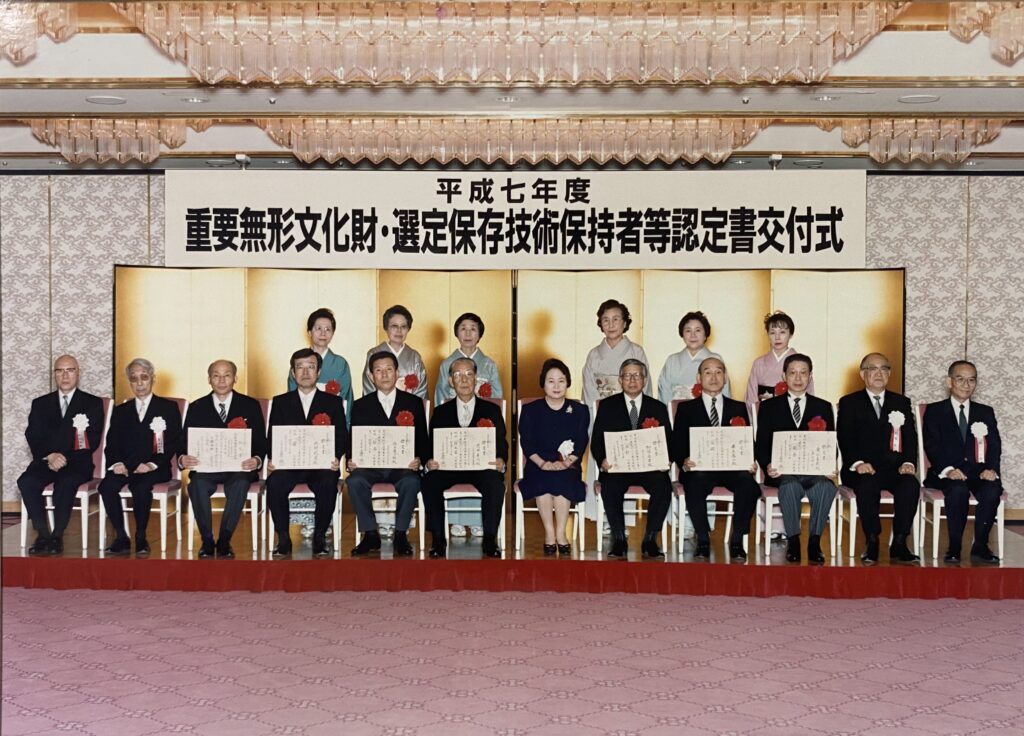
長年にわたり陶芸の研鑽を重ねてきた萬二は、1995年(平成7年)、伝統的な白磁技法を会得し、その芸術性を高め、後進の指導に尽力したとして、66歳のとき、重要無形文化財「白磁」保持者(人間国宝)に認定されました。
白磁の可能性を追い求めてきた萬二にとって、注ぎ込んできた情熱が結実した大きな節目の年でした。萬二はこのときのことについて、「最高の名誉。若い人たちに日本の伝統的な工芸のあり方を伝えていくよう求められた、と受け止めている」と話しています。
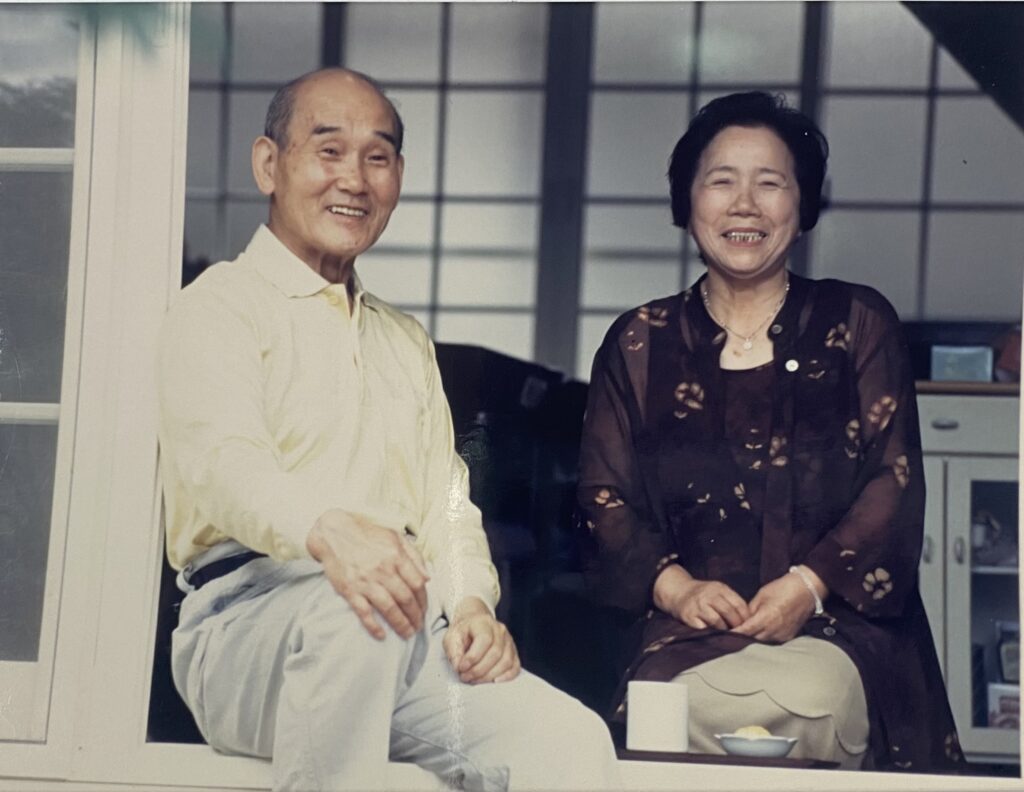
萬二の大きな支えとなっていたのは、子供たちを育てながら家庭を一身に守り、仕事に勤しむ夫に寄り添い続けた妻・久子の献身でした。萬二が渡米によって長く家を空けた際には手紙を送り、遠く離れた萬二の心の拠り所となりました。多忙な夫に、久子は愚痴ひとつこぼさなかったといいます。「私の人生は久子のおかげ」と、萬二は数々のインタビューで妻への深い感謝の言葉を残しています。
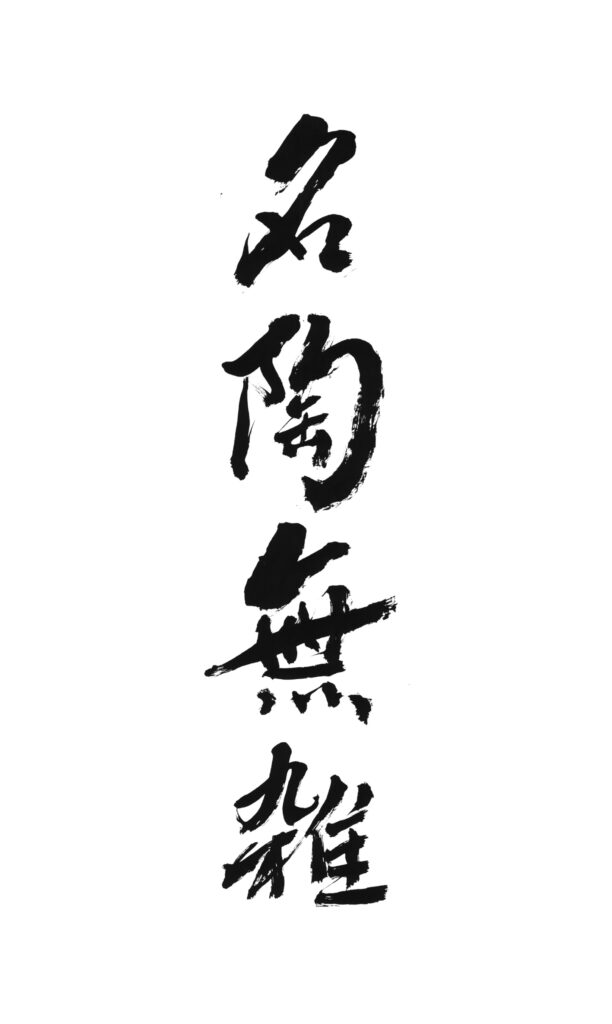
「名陶無雑」
陶芸家として歩み続けた中で、萬二が大切にした「名陶無雑(めいとうむざつ)」という言葉があります。陶磁学者であり作家・陶芸評論家の、小山冨士夫氏から萬二に贈られたものです。
小山冨士夫氏との出会いは、1968年(昭和43年)頃。1971年(昭和46年)に井上萬二窯を開窯する前、萬二が窯業試験場の技官を務めていた頃のことです。東京で行われた展示会で、小山氏から声をかけられたことが二人の接点となりました。
萬二は、初めて出会った当時の小山氏の印象を、「近づきがたいほどの陶芸界の重鎮」と語っています。
その際、萬二は「先生、いつか個展を開くようになったら推薦文をお願いします。」と伝えると、小山氏は「あなたには何も要らないよ。」と答え『名陶無雑』と書き記し、「良い焼き物、名品には雑念が無い。その心で行きなさい。」と、この四字を萬二に贈りました。
以来、「名陶無雑」は萬二の座右の銘として、生涯その心に刻まれ続けました。
「よい焼物には雑念がない」。
萬二の孫であり、井上萬二窯三代目の井上祐希は、萬二の逝去後、萬二を思う日々の中でこの「名陶無雑」を自らに重ね、次のように捉えています。
———
この言葉には、よいものをつくることにとどまらず、人間の生き方そのものにも通じるものがあると感じます。
雑念を無くすということは、過去の後悔や未来への不安、欲望、他人からの評価、恐れなどにとらわれず、執着せず、今と向き合って生きること。
それは、自分が人としてどう在りたいのか、その理解を深め、自らをかたちづくっていくための、普遍的な営みではないでしょうか。
祖父から受け継いだ「名陶無雑」の心得は、私たちがどう生きるか、その道を静かに照らす一つの道しるべ。
この教えをいつも心に持ち続けることで、さまざまなモノがあふれる現代においても、より豊かで、満ち足りた日々を送ることができると信じています。
———
よいものをつくること。また、それを生み出す自らの今という生き方に懸命に向き合うこと。
萬二が生涯大切にした「名陶無雑」の精神は、当主となった祐希の感性と価値観を通し、新たな解釈とともに井上萬二窯のものづくりの中に確かに息づいているのです。
次回は、萬二がどのような考えのもとに伝統と革新を捉え、次代へつないでいこうとしていたのか、萬二にとっての「継承」と「創造」のあり方について紐解きます。
教えを受けた作家や職人のものづくりについて、そして、萬二自身が挑戦を通して育んだ想いについて綴ります。
In this vol.2, we trace Manji’s journey with ‘Hakuji’ after he established his kiln, the motto of “Meito-Muzatsu”-True mastery in ceramics lies in purity, with nothing extraneous– that he cherished throughout his life, and the legacy that continues to be passed down to future generations.
From Exhibition Success to Opening Inoue Manji Kiln
In 1968, at the age of 39, he submitted works for the first time to the 15th Japan Traditional Art Crafts Exhibition, where two pieces – the ‘Hakuji Ryuun Nerikomi Kaki‘ -White porcelain flower vase with flowing clouds marbled clay technique – and the ‘Hakuji Hanagata Kaki’-White porcelain floral-shaped vase’– were selected.
The ‘Hakuji Ryuun Nerikomi Kaki’ is a piece elegantly shaped on the potter’s wheel using porcelain clay mixed with “Gosu” – Cobalt -. It was said that the design, reminiscent of clouds flowing across a blue sky, embodies the admiration he felt for pilots soaring through the skies during his time at Yokaren (Imperial Japanese Navy Aviator Preparatory Trainees).
Encouraged by the simultaneous selection of both works at the Japan Art Crafts Exhibition, he subsequently began actively submitting works in ‘Hakuji’.
Three years later, in 1971, Manji established his own kiln, the ‘Inoue Manji Kiln’, on the site of his family home – the former location of the Inoue Pottery Works, which had previously ceased operations – and embarked on a full-fledged independent career as a ceramic artist.
After the war, when Manji, aged 16, was demobilised and returned home, his father, Teruji, entrusted him with the hope of reviving the family business. This hope was realised in a new form when Manji, at the age of 42, established the Inoue Manji Kiln.
The mind of a boy
In 1979, his skills in pottery were recognised, and he received an award from the Minister of Labour as a ‘Master Craftsman of the Present Age’.
“How diverse a range of works could be created using unadorned white porcelain, relying solely on the beauty of its form?” “To what kind of artistic expression could this be elevated?” Whilst continuing this exploration, Manji was simultaneously committed to maintaining a rich inner life.
Even as his reputation as a ceramic artist grew, his boundless curiosity, fresh ideas and lifelong passion for pottery never waned. Speaking in later years about this remarkable vitality, Manji remarked: ‘As long as I am captivated by pottery, no matter my age, my spirit will remain that of an eternal youth.’
Furthermore, drawing inspiration from ancient ceramics that caught his eye whilst inspecting the Jingdezhen kilns in China, he created the “Seihakuji Chomon Bachi”-Pale Blue Porcelain Bowl with Carved Pattern – through a process of repeated refinement then in 1987, it was awarded the Minister of Education Prize at the 34th Japan Traditional Art Crafts Exhibition.
Although this piece is not entirely white, it emphasises the beauty of white porcelain whilst employing the ‘kake-wake’- glazing technique -, creating a striking contrast between the white and the blue-green hues of the glaze. Manji described this technique as ‘my second approach to pottery-making’. Subsequently, alongside his all-white porcelain pieces, he produced numerous works using the ‘kake-wake’ technique, thereby opening up a new path in his pottery practice.
Designated a Living National Treasure in ‘Hakuji’
In 1995, at the age of 66, Manji was designated as a Living National Treasure in ‘Hakuji’, recognizing his long-standing devotion to honing ceramic techniques, his elevated artistic craftsmanship, and his commitment to training future generations.
For Manji, who had spent his life exploring the potential of white porcelain, this was a major milestone marking the fruition of the passion he had poured into his craft. Reflecting on this occasion, he remarked, ‘It is the highest honour. I take it to mean that I have been called upon to pass on the essence of traditional Japanese craftsmanship to the younger generation.’
A major source of support for Manji was the devotion of his wife, Hisako, who single-handedly looked after their children and the household whilst standing by her husband as he devoted himself to his work. When Manji was away from home for long periods whilst in the United States, she would send him letters, serving as a source of emotional support for him from afar. Hisako never once complained to her busy husband. ‘My life is thanks to Hisako,’ Manji had expressed his deep gratitude to his wife in numerous interviews.
Manji’s Motto “Meito-Muzatsu”
Throughout his career as a ceramic artist, he held dear the motto ‘Meito-Muzatsu’. It was bestowed upon him by Fujio Koyama, a ceramics scholar, artist and ceramics critic.
Manji first met him around 1968. This was before Manji established the Inoue Manji Kiln in 1971, whilst he was working as a technical officer at the Ceramic Research Institute. Their first encounter took place at an exhibition in Tokyo, where Fujio Koyama approached him.
Manji described his impression of Fujio at the time of their first meeting as ‘a leading figure in the world of ceramics who seemed almost unapproachable’.
On that occasion, Manji said to him, ‘If I ever hold an exhibition, I would be grateful if you could write a recommendation for me.’ Fujio replied, ‘You don’t need anything from me,’ and wrote the phrase ‘Meito- muzatsu’ presenting four Kanji characters(名陶無雑) to Manji with the words, ‘Fine pottery and masterpieces are free from distracting thoughts. Carry on with that spirit.’
From that time onwards, “Meito-Muzatsu” became Manji’s motto, remaining etched in his heart throughout his life.
‘Fine pottery is free from extraneous thoughts.’
Yuki Inoue, Manji’s grandson and the 3rd generation head of the Inoue Manji Kiln, reflected on these words in the days following Manji’s passing as he remembered him, identifying with ‘Meito-Muzatsu’ and understanding it as follows:
———
I feel that these words extend beyond simply creating fine works; they also apply to the very way we live our lives.
To rid oneself of distracting thoughts means not being held captive by regrets about the past, anxieties about the future, desires, the judgement of others or fears; it means living in the present without clinging to such things.
Is this not a universal endeavour—one through which we deepen our understanding of how we wish to be as human beings and shape our own lives?
The motto “Meito-Muzatsu”, passed down from my grandfather, is a guiding light that quietly illuminates the path of how we should live.
I believe that by always keeping this wisdom in our hearts, we can lead richer and more fulfilling lives, even in this modern age overflowing with material possessions.
———
To create truly meaningful works. And to engage wholeheartedly with the way we live in the present moment as we bring them into being.
The spirit of “Meito-Muzatsu”, which Manji cherished throughout his life, lives on with new understanding within the craftsmanship of the Inoue Manji Kiln, channelled through the sensibilities and values of Yuki, who has now taken over as head of the kiln.
In Vol.3, we are going to trace how Manji viewed tradition and innovation, shedding light on his unique approach to both inheriting the craft and creating something new for future generations. We’ll also delve into the craftsmanship of the master artisans who guided him, as well as the deep-held passion Manji forged through his own personal challenges.
We hope you enjoyed this Vol.2 and look forward to sharing our next post with you!
Thank you so much for reading. We remain deeply grateful for your ongoing support and interest in what we do.