
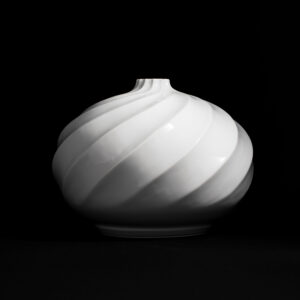
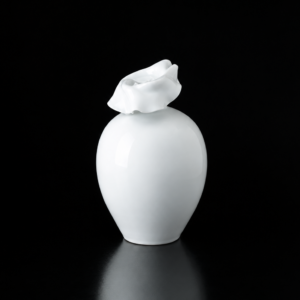
1971年(昭和46年)、井上萬二は、祖父・惣吉、父・輝二から託された、生家である井上製陶所があった地に、井上萬二窯を築きました。
恩師から授かった技に加え、技官として、また教える立場として培ってきた知識と経験を糧に、作陶の道を歩み続けた萬二。1995年、重要無形文化財「白磁」の保持者(人間国宝)の認定を受けます。
有田に息づいている焼き物の伝統を受け継いでいく一方で、萬二が同じように重きを置いていたのは、 「革新」でした。「挑戦せずに伝統は守れない。」―萬二が残したこの言葉からは、伝統は守るだけではなく、歴史とともに新たな可能性を切り拓こうとする考えが表れていました。
萬二は、「伝統」と「革新」をどのように捉え、その両者をどのように結びつけながら取り組んできたのか。そこにかける想いと、受け継ぐ作家と職人のものづくりへの向き合い方を紐解きます。
受け継ぐことと挑戦すること
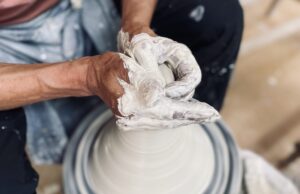
萬二が磨き上げたろくろの技術と、作陶の信念であった「名陶無雑」の精神は、2代目・康徳、そして当代の祐希へと受け継がれています。三代にわたり、伝統の継承を礎としながら、それぞれの作家が自身の感性と美意識を織り交ぜた表現を追求し、三者三様の作品を生み出してきました。
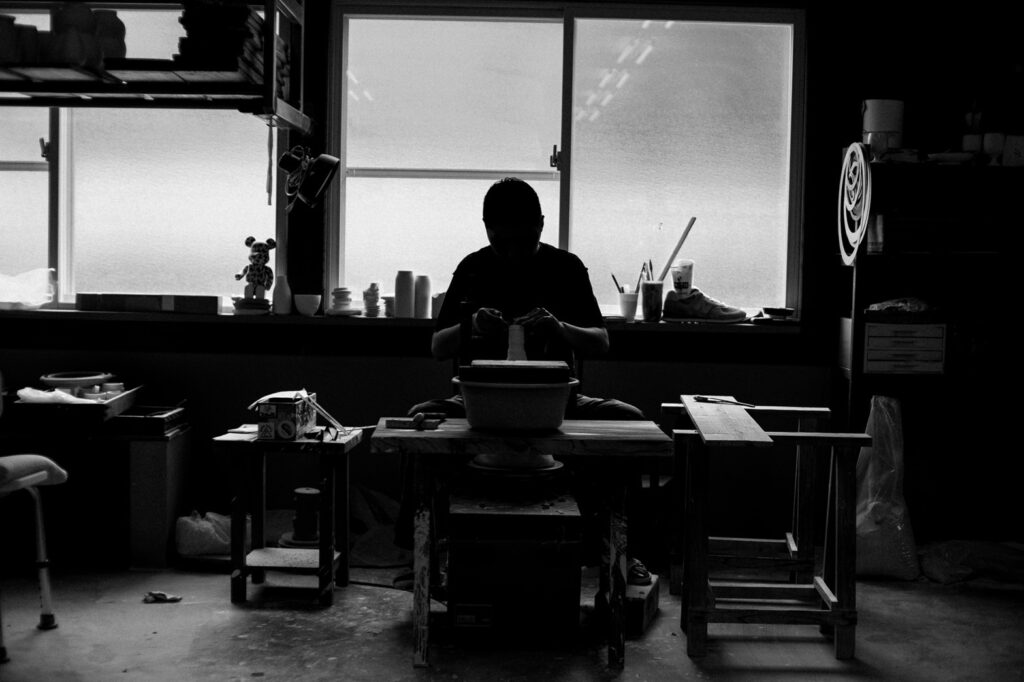
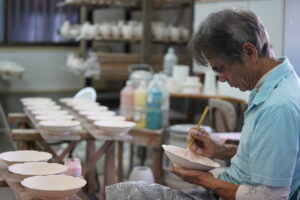
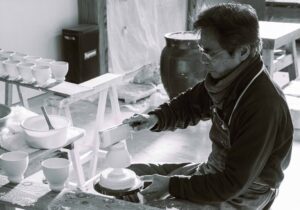
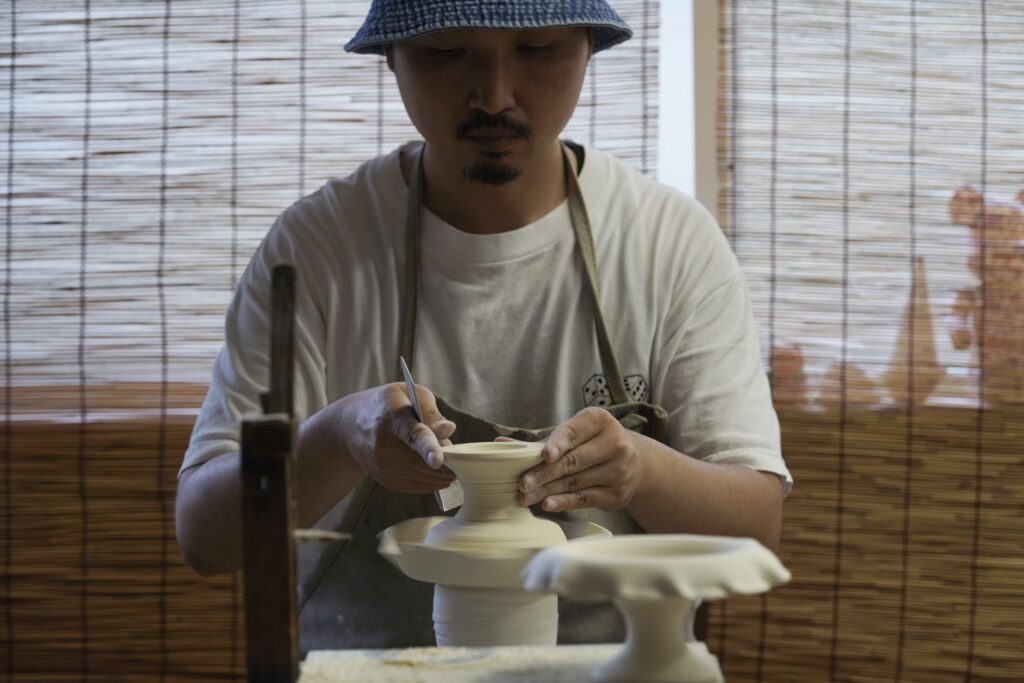
窯の作品の制作を担う職人もまた、長年にわたり萬二のもとで指導を受け、その技術と精神を直接学んできました。その教えから培われた美意識と焼き物を見る目をよりどころに、当代の監修のもとで、日々制作を行っています。
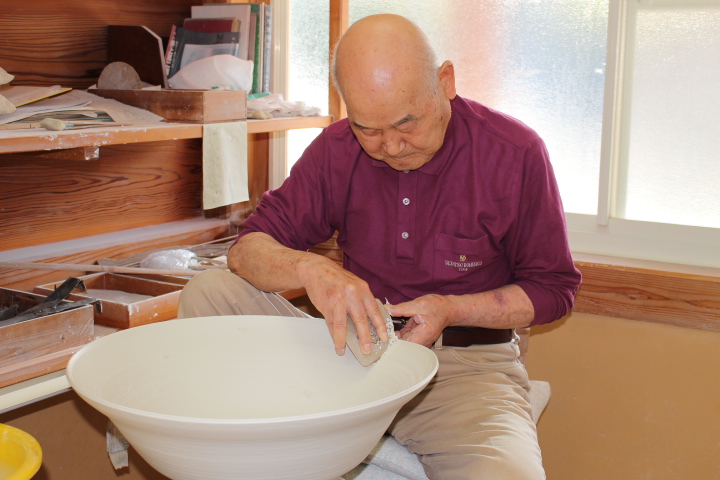
萬二は、400年以上の歴史を持つ有田焼において、先人たちが築いてきた技術や伝統を受け継いでいかなければならないと考える一方で、次の時代へとつなぐため、新たなものを生み出そうとする挑戦を重ねてきました。
また、学んだ技術を土台に生み出されるものについては、その先の表現はそれぞれの作り手に委ね、個々のものづくりに現れる個性を見守っていました。

井上萬二窯職人 永松一禎
それぞれに宿る美意識
父・康徳が、その父である萬二の教えをどのように受け止め、作陶に励んでいたのか。二人を側で見てきた3代目・祐希は、次のように話しています。
「康徳は心から、父である萬二を尊敬していました。萬二の作品を好きでいる方々が康徳の作品を見たときに、自然に心に入り込めるような作品に魅力を感じ、『息子さん(康徳)もまたいいね』と納得して頂けるような手仕事をする、そうした役割の一端が自分にあるとどこかで感じていたのではないか。それが父・萬二へのリスペクトでもあると捉えていたのではないか。」
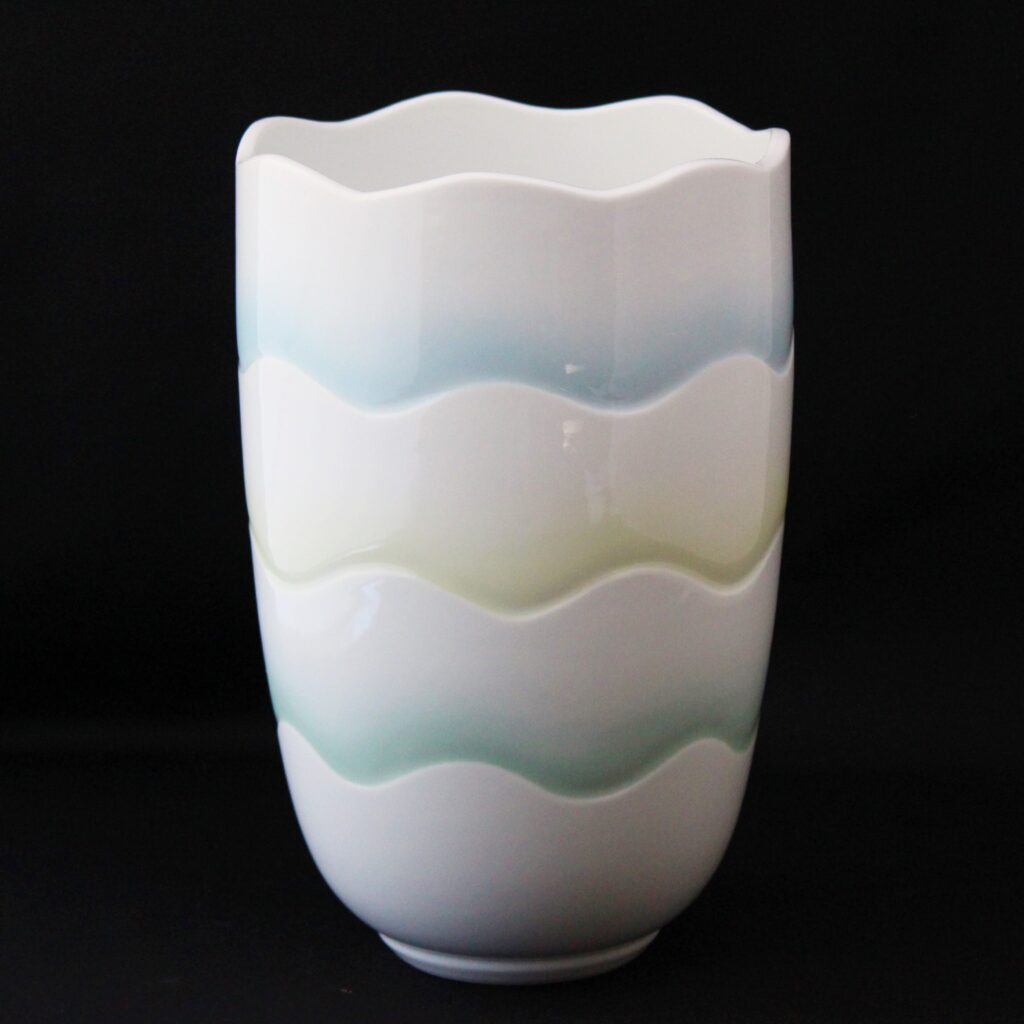
くすみなく澄んだ青釉、やさしく丸みを感じさせる緑釉、淡く穏やかな黄釉。端正な造形に白磁を主とし、波文や線刻文をはじめとする文様に合わせて色彩を配した作品は、康徳の代表的な作風のひとつです。
祐希は、康徳の作品について、「誠実さと真面目さ、丁寧さといった性格がそのまま現れているのではないか」と語っています。
また、「『爽やかな気持ちになれるような作品を作っている』と父が話しているのを聞いたことがある」と、祐希は言います。
すっきりとした清々しさに、木漏れ日の光が差し込むかのような直線、一雫が水面に落ちたような波文。空や海、貝殻にも見えるグラデーション。そうした自然の景色を思わせる豊かさと温かみとが、ひとつの作品の中に共存しています。
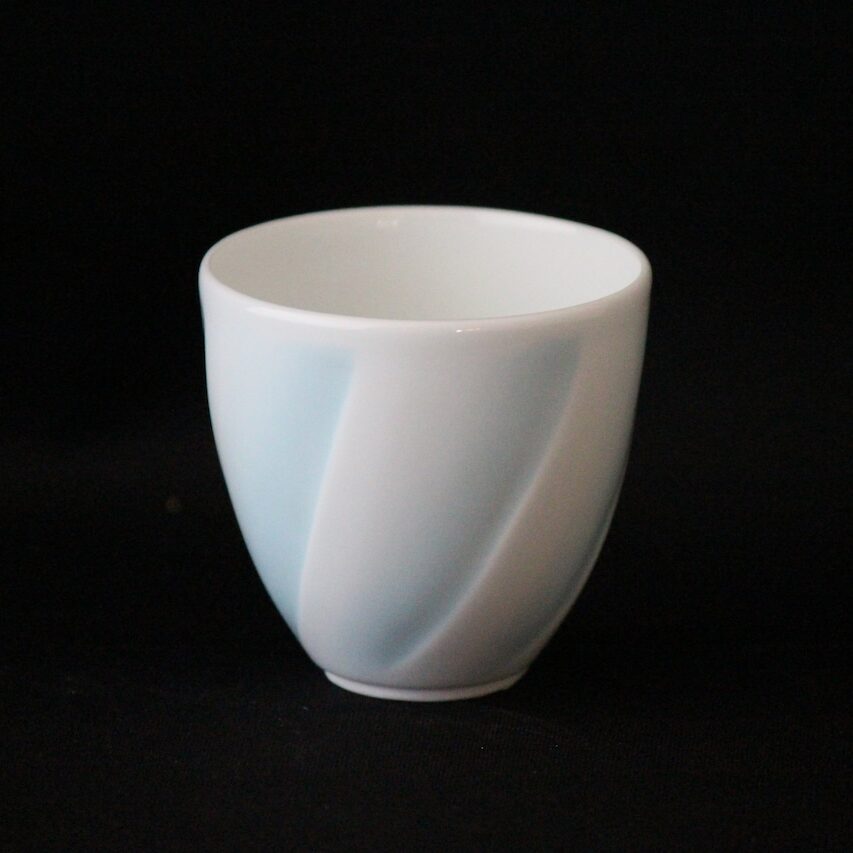
祐希にとって有田焼は、生まれ育った環境の中に溶け込み身近な存在であり続けてきたものでした。だからこそ、受け継ぎ、守っていくものであると同時に、あらためて問い直していくものでもあるといいます。
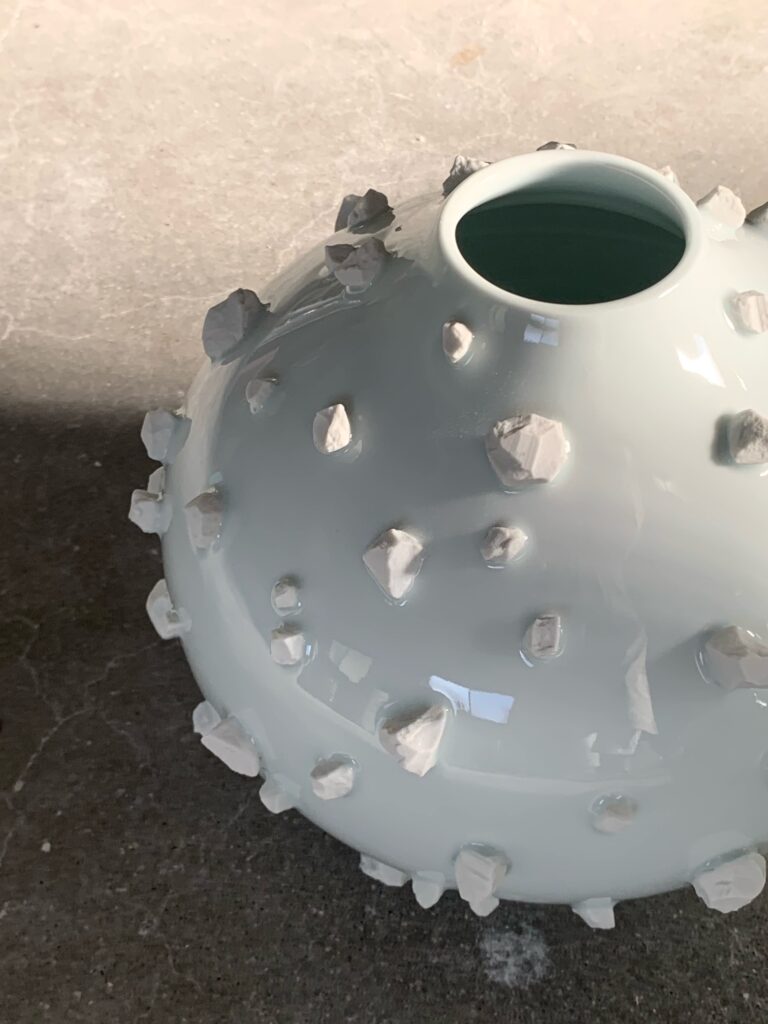
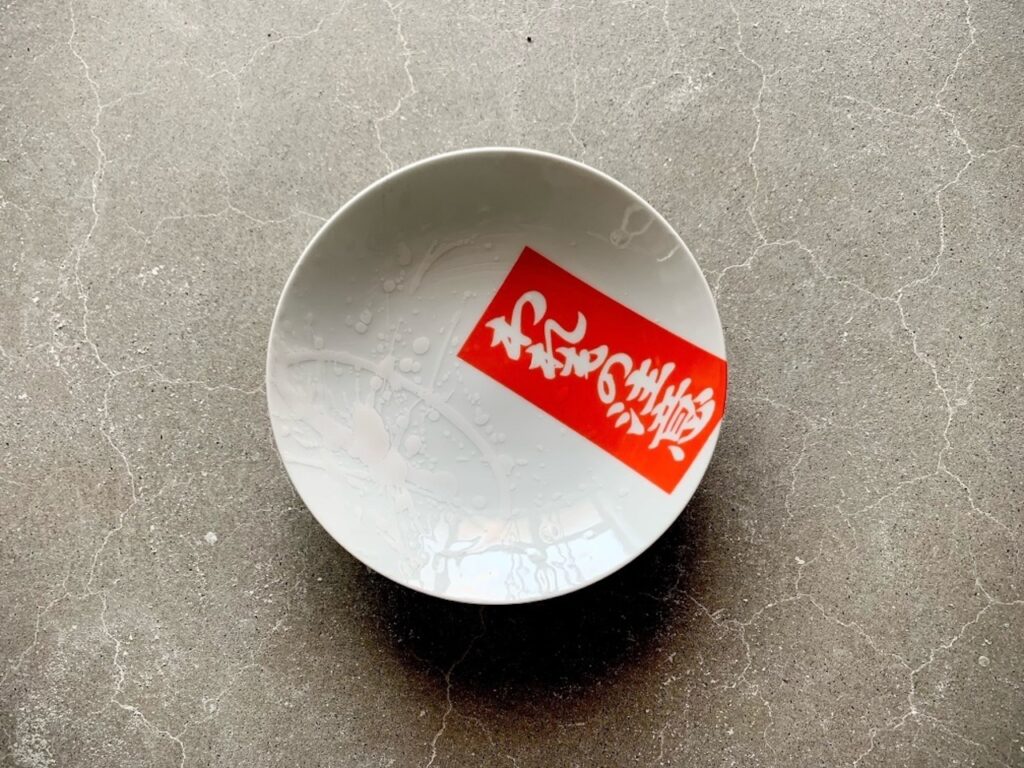
美しさとは何か。「大切にする」とは、どういうことか。いまの時代につくるべきものは何か。自分にしかつくれないものとは何なのか。
祐希のものづくりの独自性は、問いを起点に物事を見つめる姿勢にも表れています。
そうした問いから見出した造形や文様を作品に落とし込み、さらにその先にある、器を介して生まれる使い手との結びつきや、暮らしのなかの豊かさまでを思い描く。抽象的な問いを、焼き物という具体的なかたちへと結んでいくのです。
あらゆるものを完成された「モノ」として捉えるのではなく、なぜそこにあるのか、なぜ美しいのかといった問いから視点を広げ、新たな発想を生み出していく。そうした祐希の表現を、萬二が否定したことはなかったといいます。
その手からしか生まれないもの
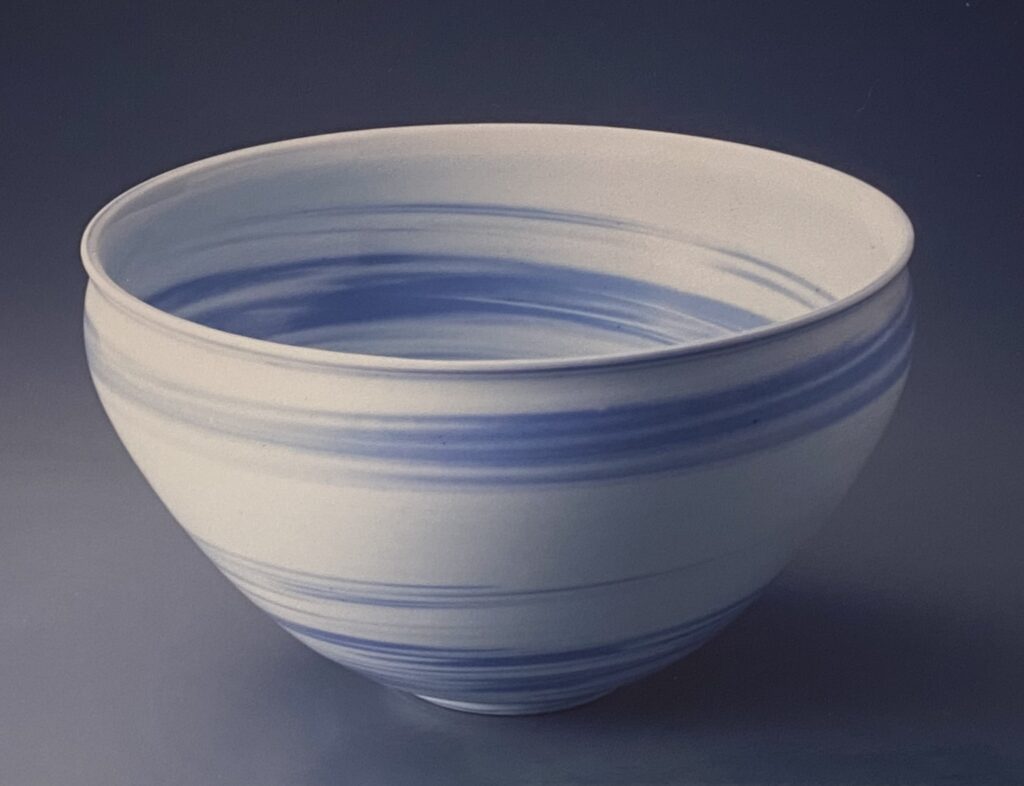
1968年(昭和43年)、日本伝統工芸展に出品し、萬二の初入選作品となった『白磁流雲練込花器』。呉須を練り込んだ磁器土をろくろ技術で端正に成形した作品で、青い空に流れる雲を思わせるその表現には、海軍飛行予科練生時代に抱いた、大空を行くパイロットへの憧れが込められています。
あるとき、萬二はこの作品をもう一度つくろうと試みますが、このとき納得の再現をすることはできませんでした。
萬二は、陶芸作家として、創造するセンスと、それを作品として体現する技術の両面を磨き、そのバランスを高めることの必要性を語っています。一方で、初入選を果たした頃よりも、センスも技術も磨いてきた後年の自分をもってしても、若き日にがむしゃらに挑み、まっすぐな情熱を注ぎ生み出した作品には、かなわないものがあったのだといいます。
この経験を通して萬二は、時を経て作品の質を高めていくことが出来ても、その時代、その時の自分だからこそ持ち得た感覚や情熱が生み出す作品には、技術やセンスでは到達できない何かがあるのだと、改めて実感したのです。
※2010年、第34回目となる和光での「井上萬二白磁展 ―空 海 花―」にて、『白磁流雲練込花器』が42年ぶりに復刻され、展示されました。
「伝統は新しくなければならない。」
萬二のこの言葉が意味するのは、伝統とは、古くから続いてきたものをそのまま受け渡すことではなく、受け継いだ技術や精神をもとに、その時代の作り手がさらに工夫を凝らして発展させ、それを新たな伝統として繋げていくということです。そのために作り手は、時代と向き合いながら挑戦をする。それが、有田焼が末長く続いていくことを願う、萬二の想いでもありました。
伝統を尊重しながら、作り手がそれぞれの挑戦を重ね、その過程で生み出される作品には、その時々に作陶にかけてきた情熱や、技術、感性が重なり合い、形となって表れています。
だからこそ、一つひとつの作品は、その時、その作り手だからこそ生み出すことのできる表現が宿り、同じものが二つとない手仕事の尊さを改めて感じさせてくれるのです。

次回は、実りの秋を迎えた有田から、11月に開催される「秋の有田陶磁器まつり」のはじまりと、井上萬二が語る食と器の関係について触れます。
As mentioned in a previous post, Manji Inoue established the ‘Inoue Manji Kiln’ in 1971 on his family’s historic grounds. Building on years of dedicated practice as a technician, teacher, and artist, he was named a Living National Treasure in 1995 for his mastery of ‘Hakuji’.
Whilst rooted in Arita’s rich heritage, Manji strongly believed that “tradition cannot be preserved without taking on challenges.” To him, honoring history wasn’t about simply copying the past—it meant constantly innovating to create new possibilities.
In this vol.3, we are going to share about his journey of his vision and examine how the artists and craftsmen who have inherited his legacy approach their craft.
To carry the traditions and try something new
The wheel-throwing techniques perfected by Manji, together with his motto of ‘Meito Muzatsu’ (‘Fine pottery is free from extraneous thoughts’), have been passed down through the second-generation master, Yasunori, to the current master, Yuki. Over three generations, whilst building upon this legacy, each artist has pursued a style that weaves together their own sensibilities and aesthetic sensibilities, resulting in three distinct bodies of work.
The artisans responsible for producing the kiln’s works have also received guidance from Manji over many years, directly inheriting his techniques and ethos. Drawing on the aesthetic sensibilities and discerning eye for pottery cultivated through his teachings, they carry out their work under the supervision of the current master.
Regarding Arita ware, with its history spanning over 400 years, Manji recognised that whilst it was essential to preserve the techniques and traditions established by his predecessors, he also continually sought to create something new in order to pass the legacy on to the next generation.
Guided by this philosophy, he entrusted the manner of expression to each individual regarding the pieces created using the techniques they had learnt, and watched over the individuality that emerged in their respective craftsmanship.
The Aesthetic Inherent in Each
__piece was meticulously formed on the potter’s wheel from porcelain clay mixed with ‘Gosu’-cobalt; its design, reminiscent of clouds drifting across a blue sky, embodies Manji’s admiration for pilots soaring through the vast skies—a sentiment he harboured during his time as a cadet at Yokaren.
On one occasion, Manji attempted to recreate this piece, but was unable to produce a reproduction that satisfied him.
As a ceramic artist, Manji spoke of the need to hone both his creative sensibility and the technical skills required to realise it, and to strike a better balance between the two. However, he also remarked that, although he had refined both his sensibility and technique in later years compared to the time of his first selection for an exhibition, the works born of the reckless energy and unbridled passion he poured into his art in his youth possessed a quality that his later self could never quite match.
Through this experience, Manji came to realise that even after honing his technical skills and artistic sensibility to the point where he could further enhance the quality of his work, it was difficult to recapture and recreate the sensibilities that were unique to himself at that particular time and stage in his life.
Tradition should be Ever-New
What Manji meant by these words is that tradition does not simply involve passing on something that has existed since ancient times unchanged; rather, it means that, building upon the techniques and spirit they have inherited, the artisans of each era refine and develop them through their own ingenuity, thereby passing them on as a new tradition. To this end, artisans take on new challenges whilst engaging with the spirit of the times. This was also Manji’s hope for the enduring future of Arita ware.
Whilst respecting tradition, each artisan undertakes their own challenges; the works created through this process embody the passion, skill and sensibility dedicated to pottery at that particular moment, all of which intertwine and take tangible form.
It is precisely for this reason that every single piece contains an expression that could only have been created by that particular artisan at that specific time, reminding us once again of the preciousness of handcrafted work, where no two pieces are ever exactly alike.
In vol.4, we will touch upon the start of the ‘Autumn Arita Ceramics Festival’ to be held in the middle of November, as well as Manji Inoue’s insights on the relationship between food and tableware.
We hope you enjoyed Vol.3. Thank you so much for reading and for your ongoing support! We are really looking forward to bringing you the next post!